Client
Role
#
3D Animation
#
Engineering
#
Product Visualization
#
Game Design
#
Motion Graphics
HUMAN ORGAN SYSTEM ON-A-CHIP (HOS)
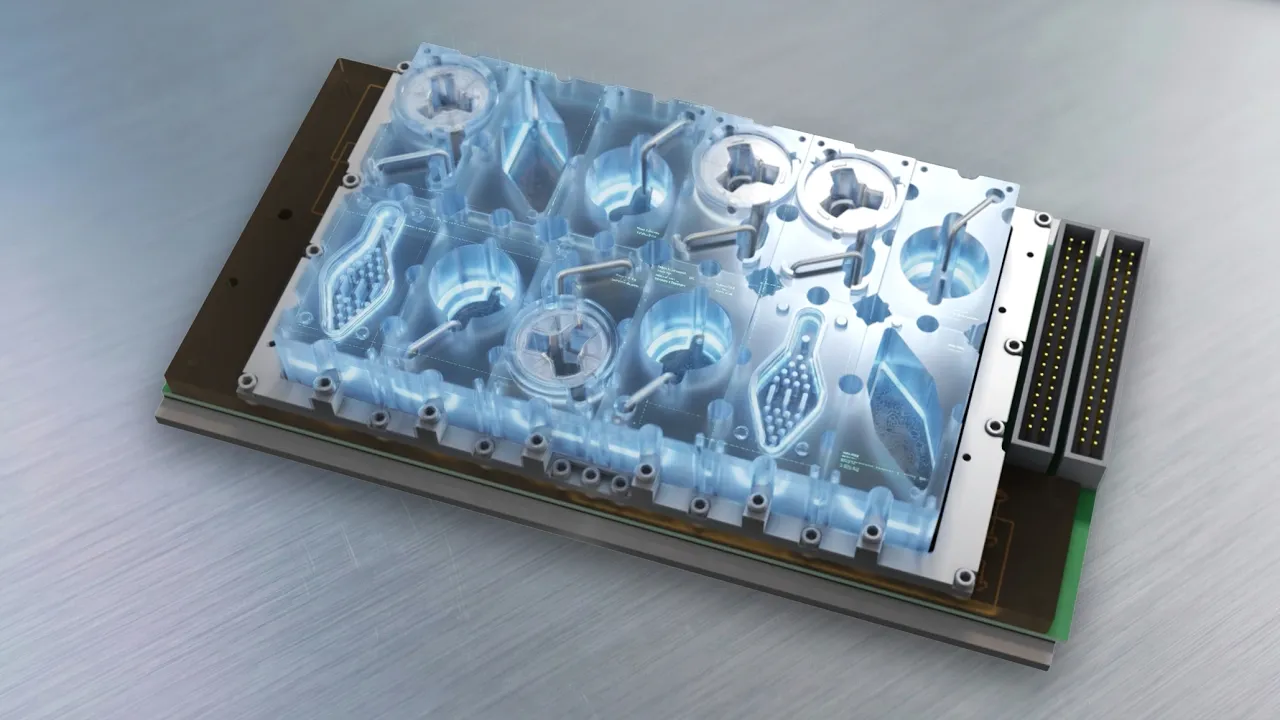
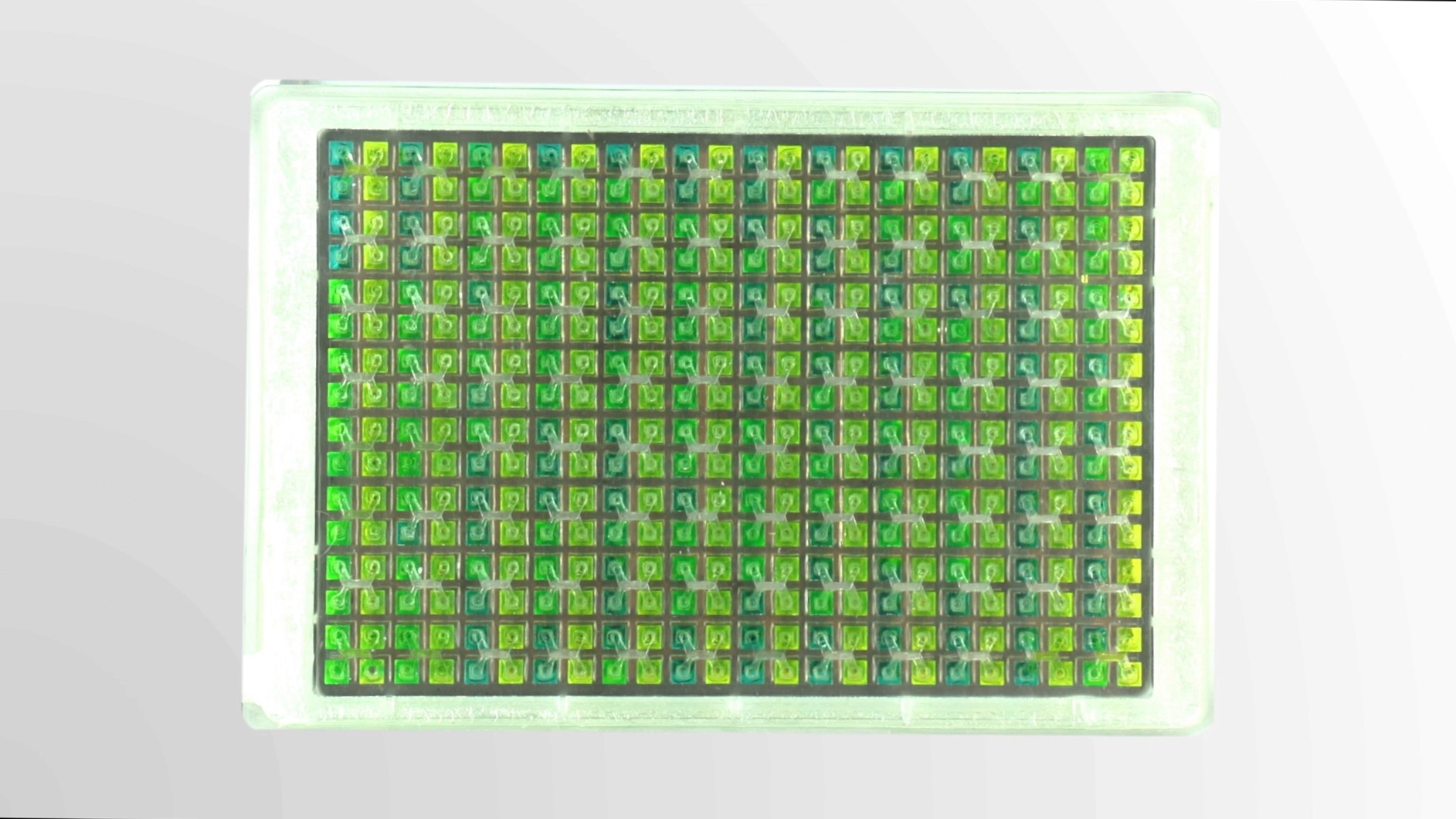
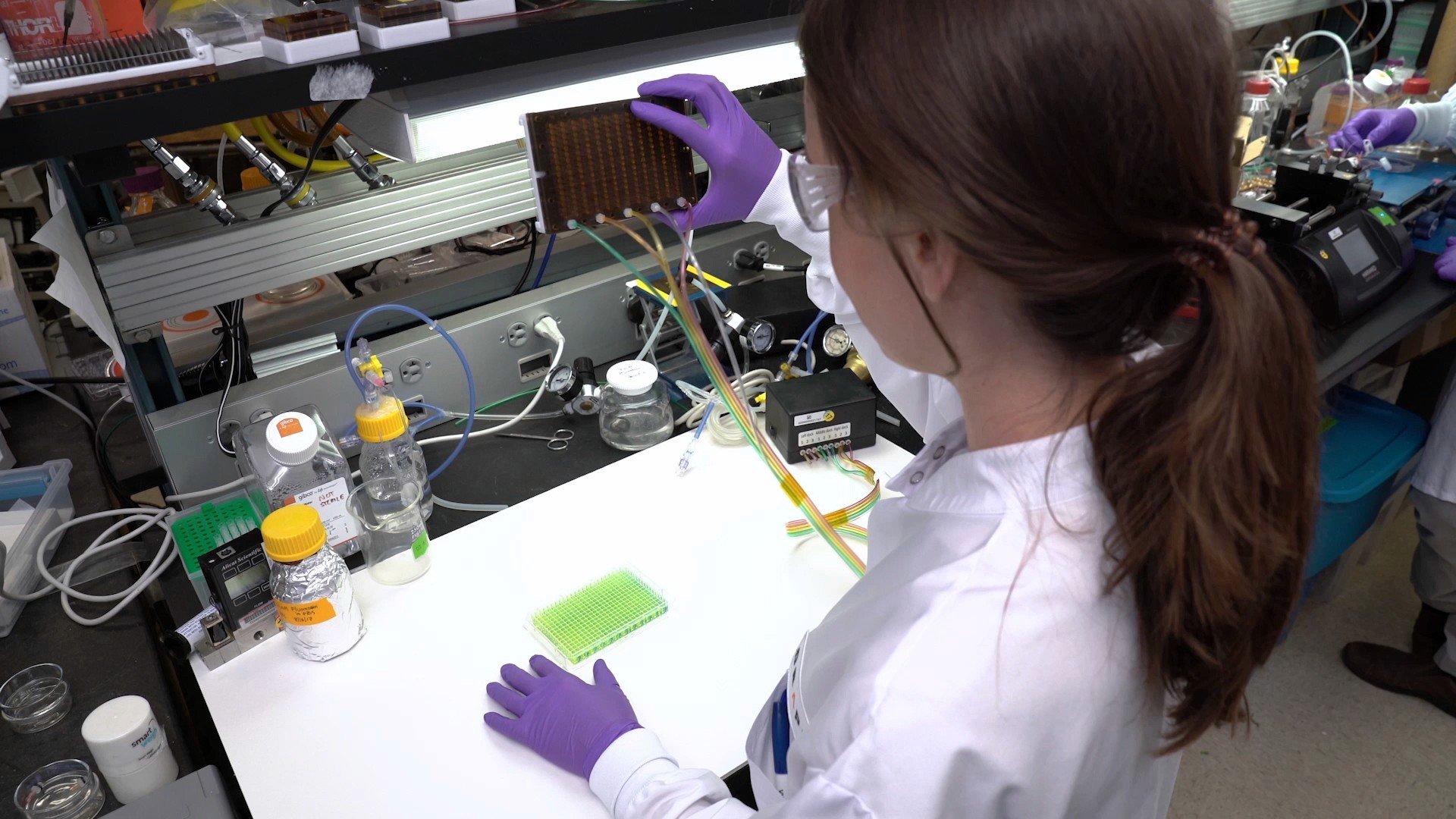
The Human Organ System (HOS) is a microfluidic platform developed at Draper to simulate human tissue behavior — enabling researchers to observe how cells respond to drugs, nutrients, and external stimuli in real time. Brought in at the platform's earliest stage and invited back as it earned additional funding and evolved, I developed the visual language that carried HOS from early prototype through to the PREDICT96 system — a high-throughput platform capable of running 96 simultaneous experiments.
The Challenge
Visualizing a device too precise to photograph and too complex to explain without animation.
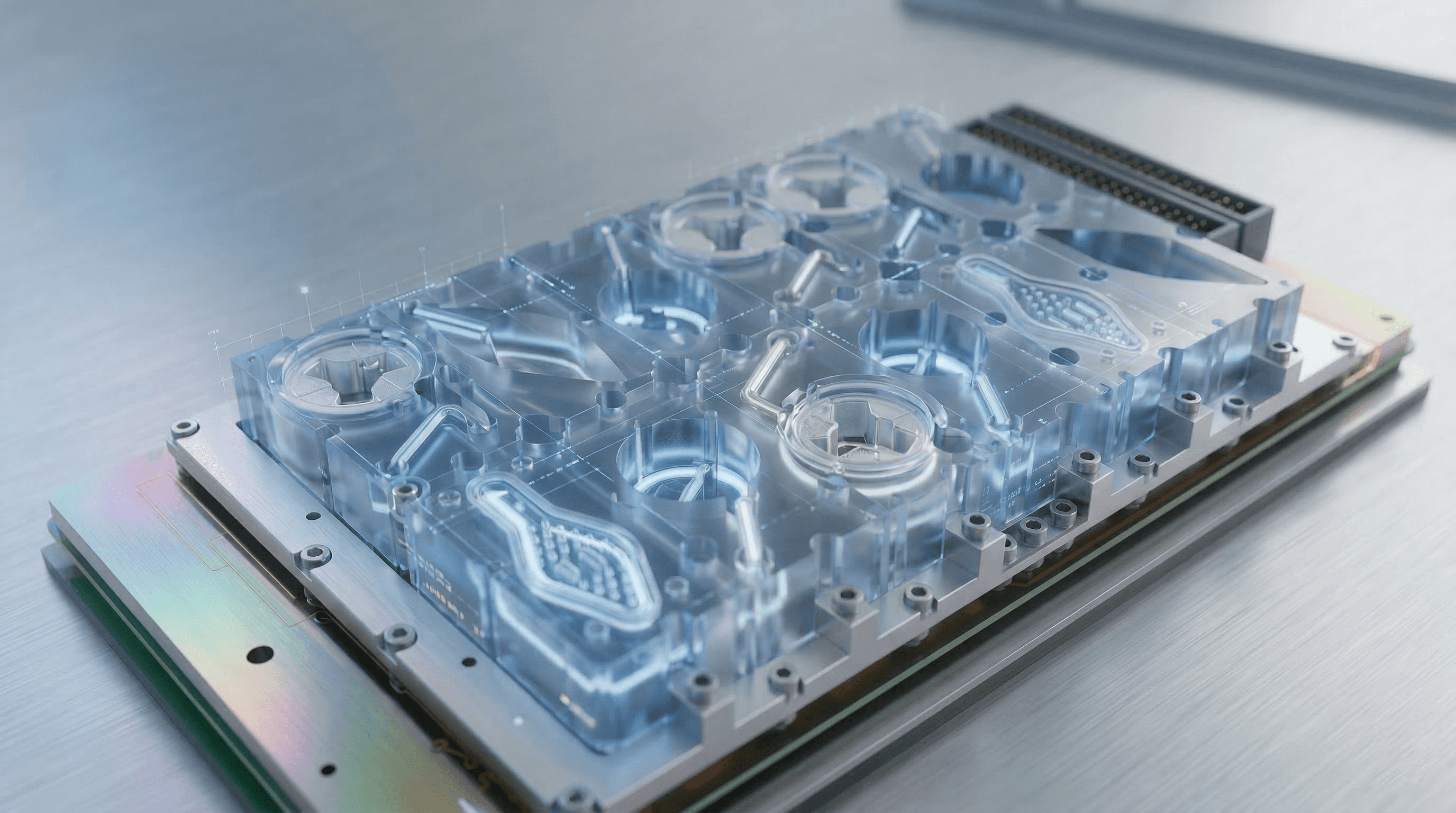
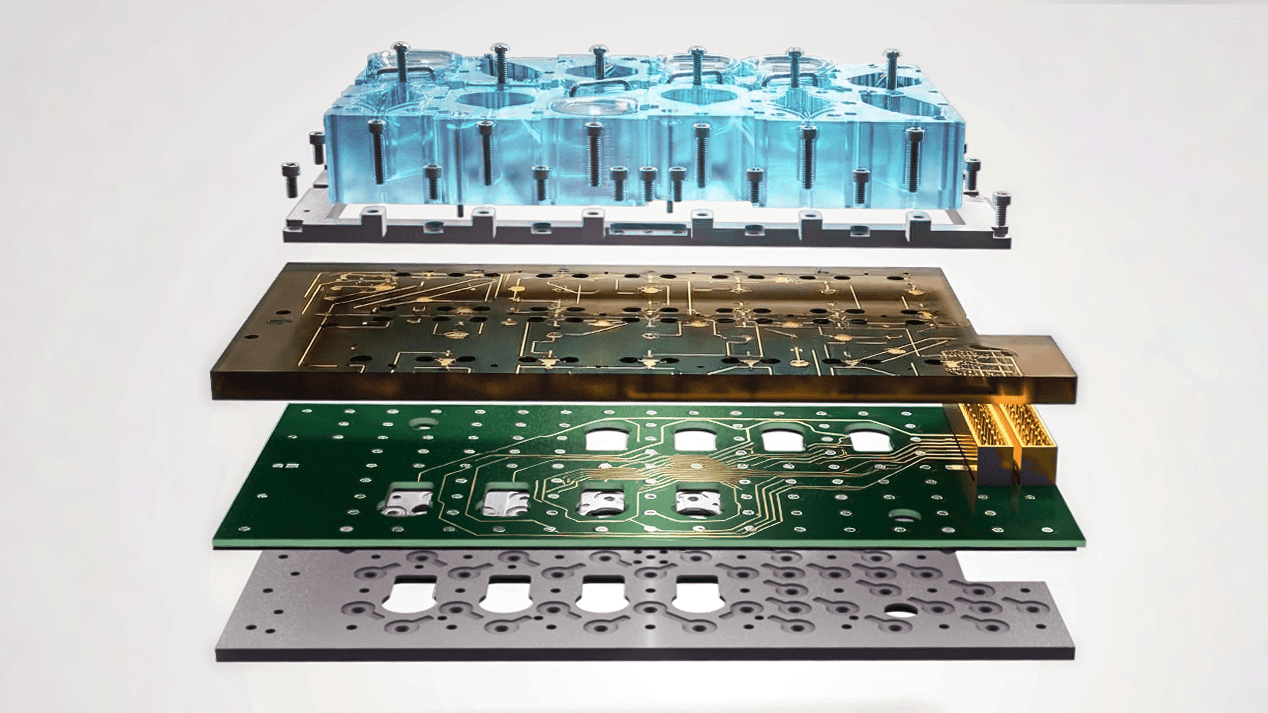
Microfluidic systems operate at a scale where traditional photography can't communicate how they work. The engineering behind HOS — fluid behavior, channel geometry, biological interaction, and system scaling — needed to be explained clearly to audiences ranging from internal stakeholders to external partners and investors. Each phase of the platform's evolution introduced new visualization challenges as the system grew in complexity, scale, and technical sophistication.
The Approach
Two rounds of development. One consistent visual language built from CAD up.
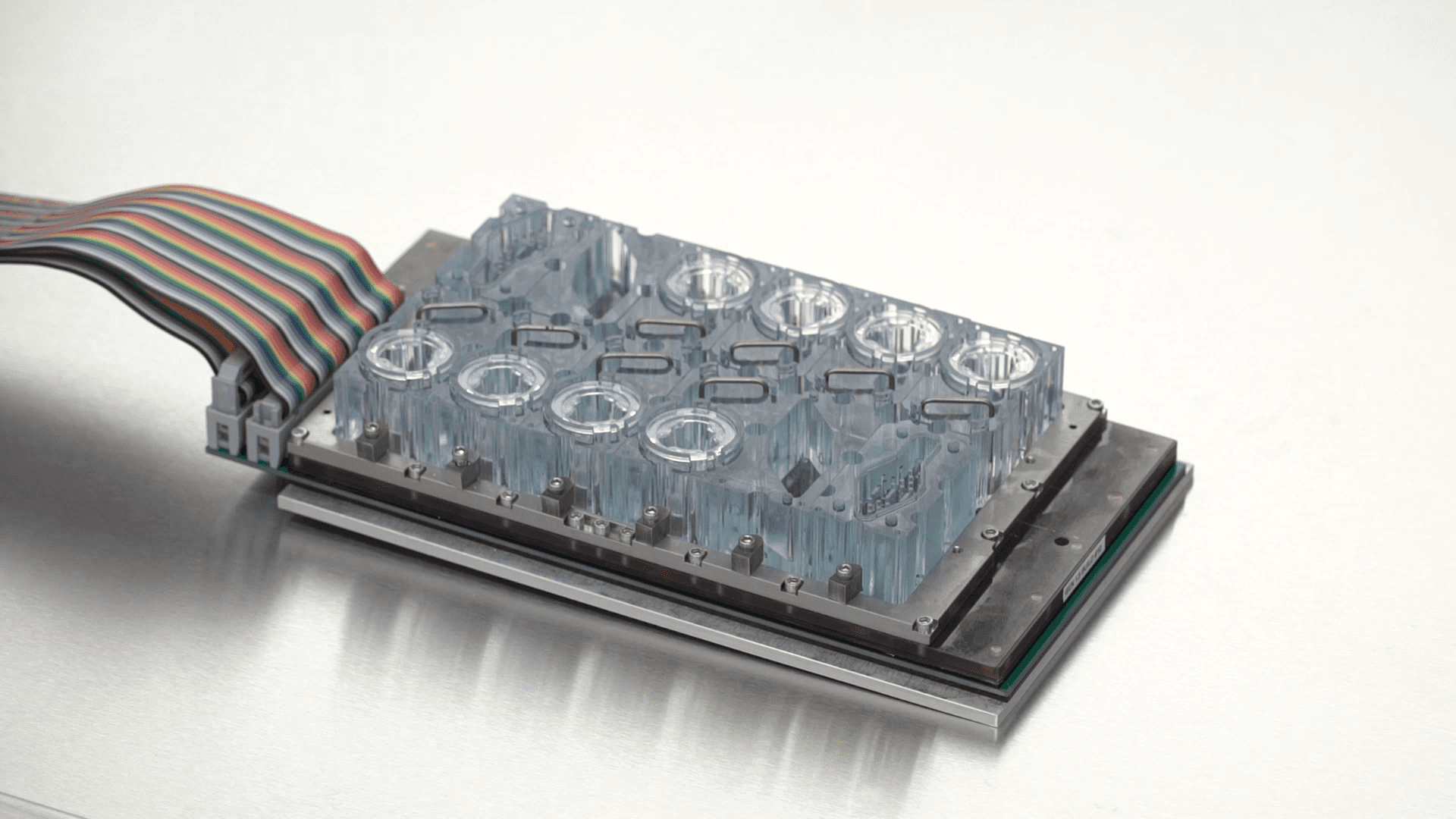
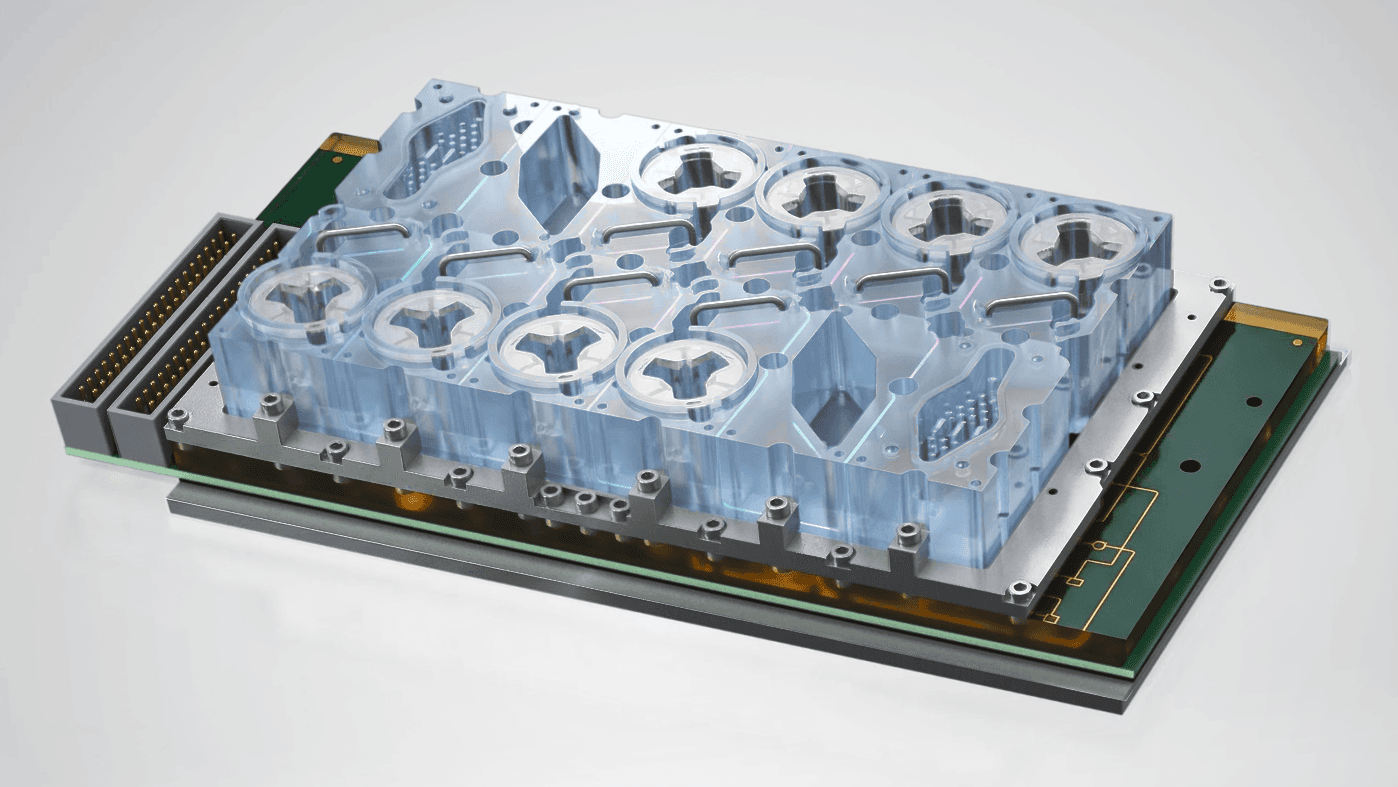
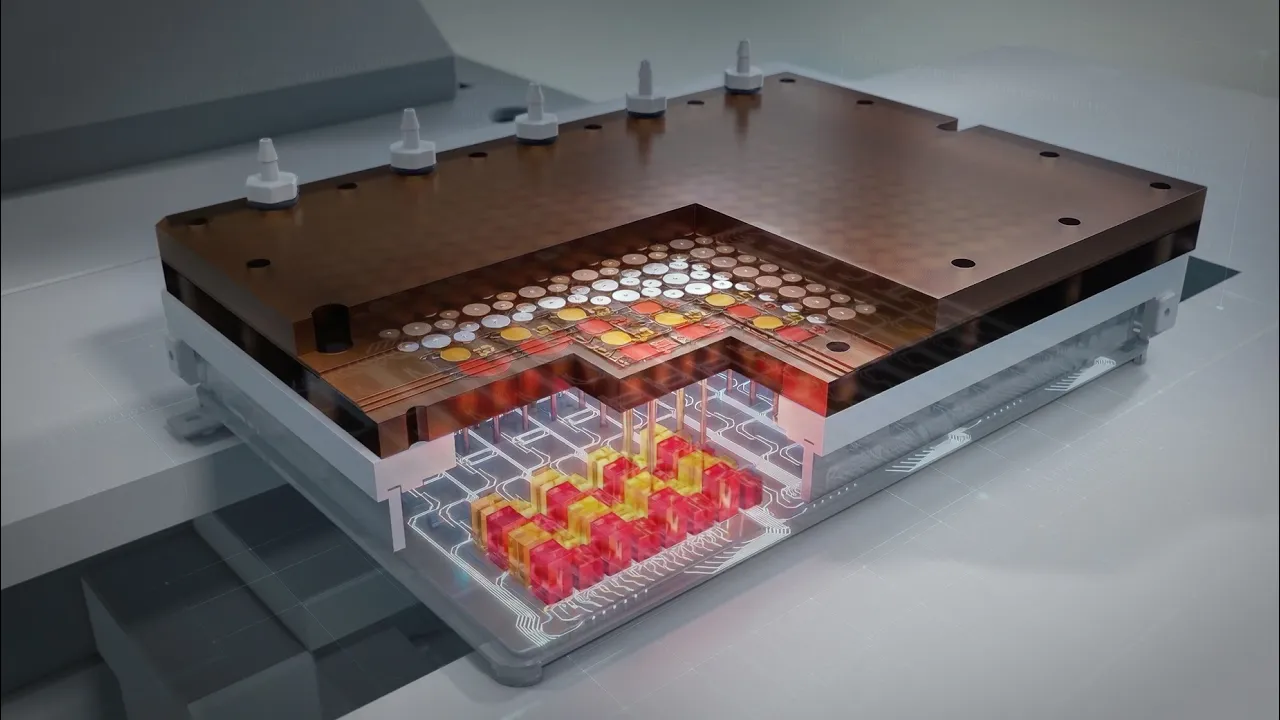
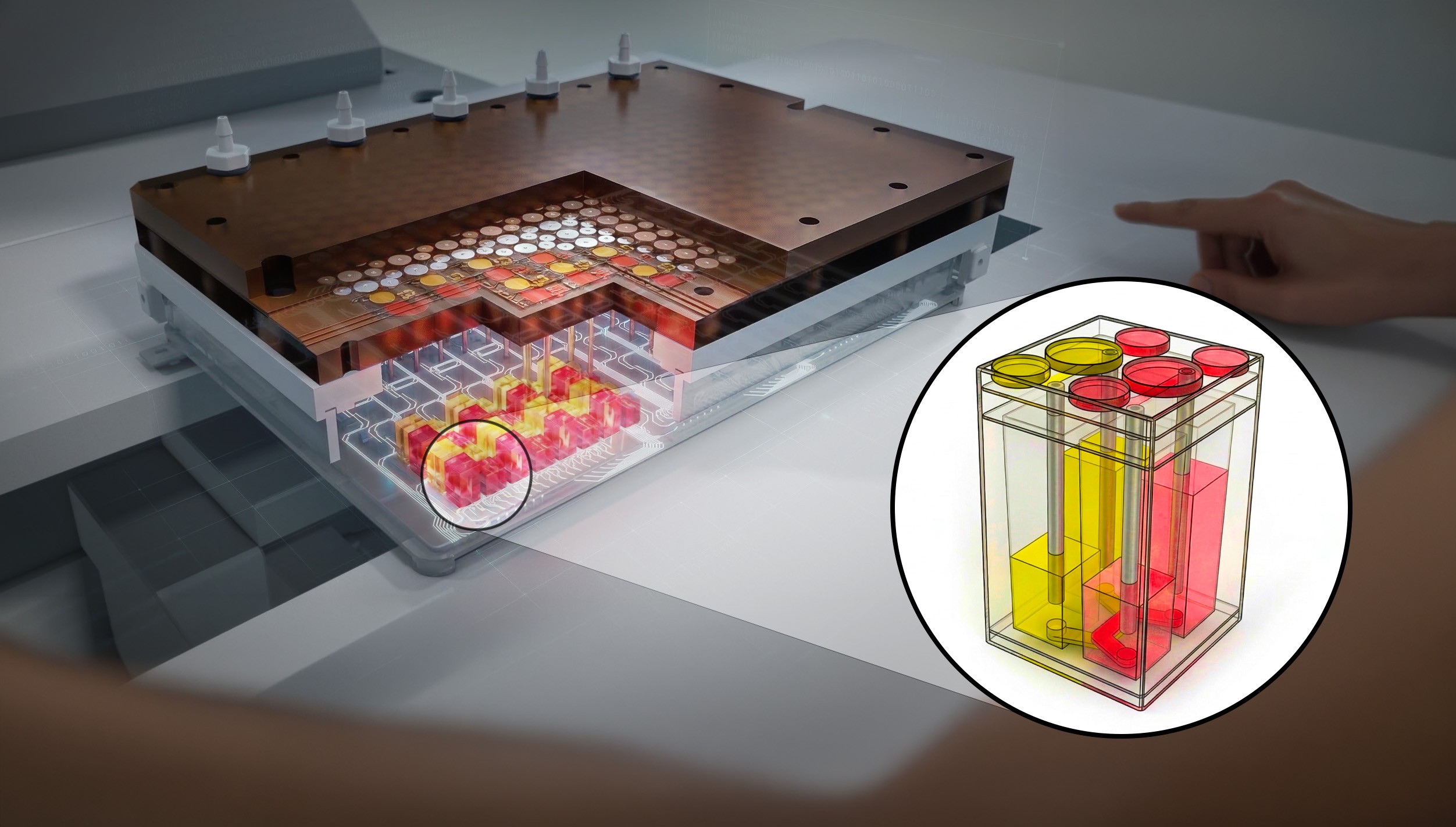
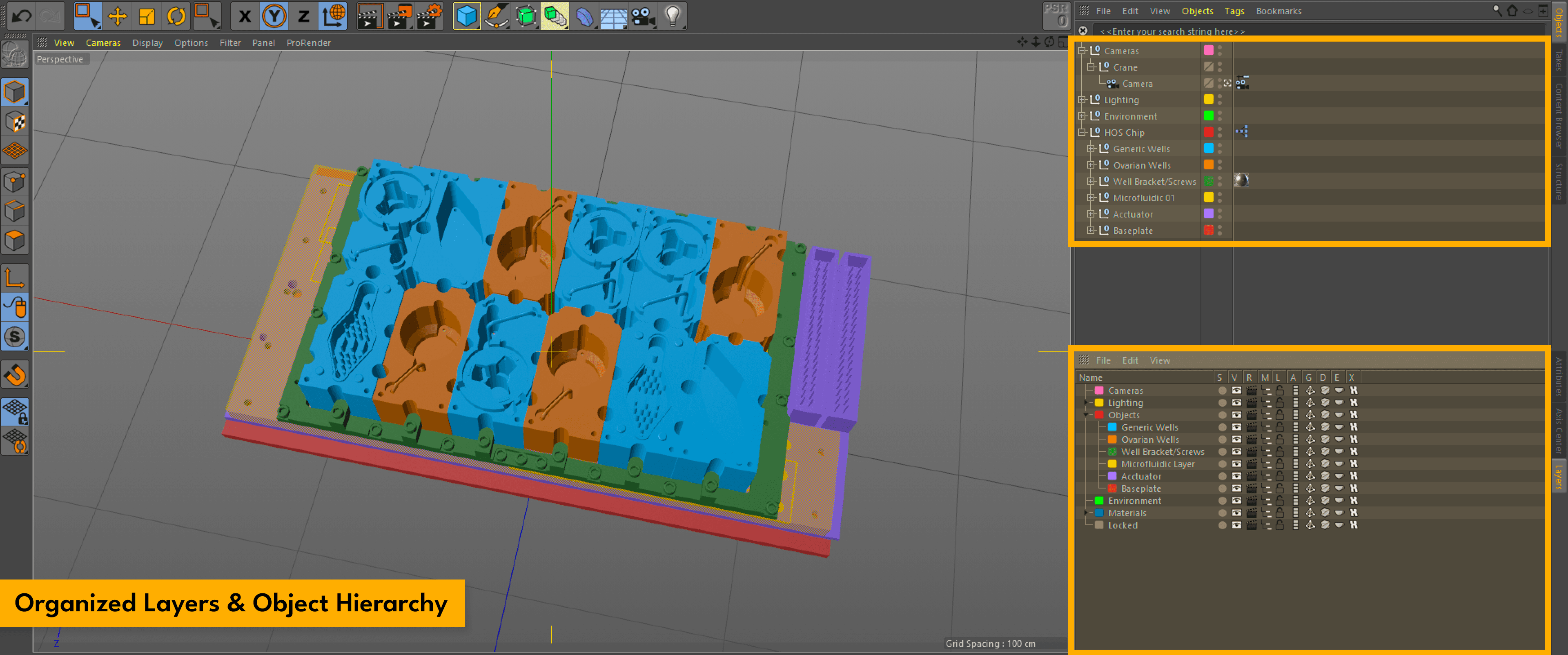
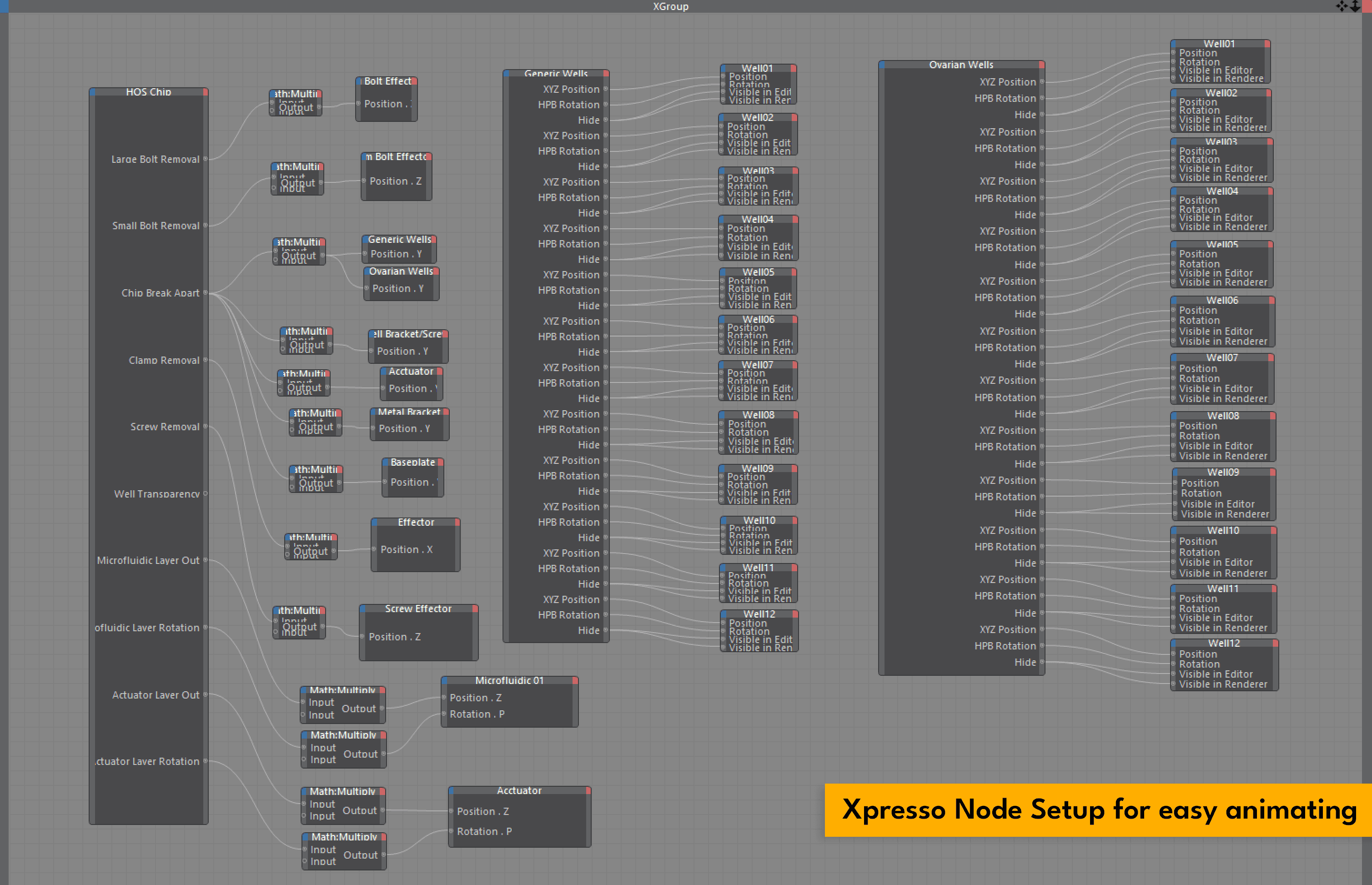
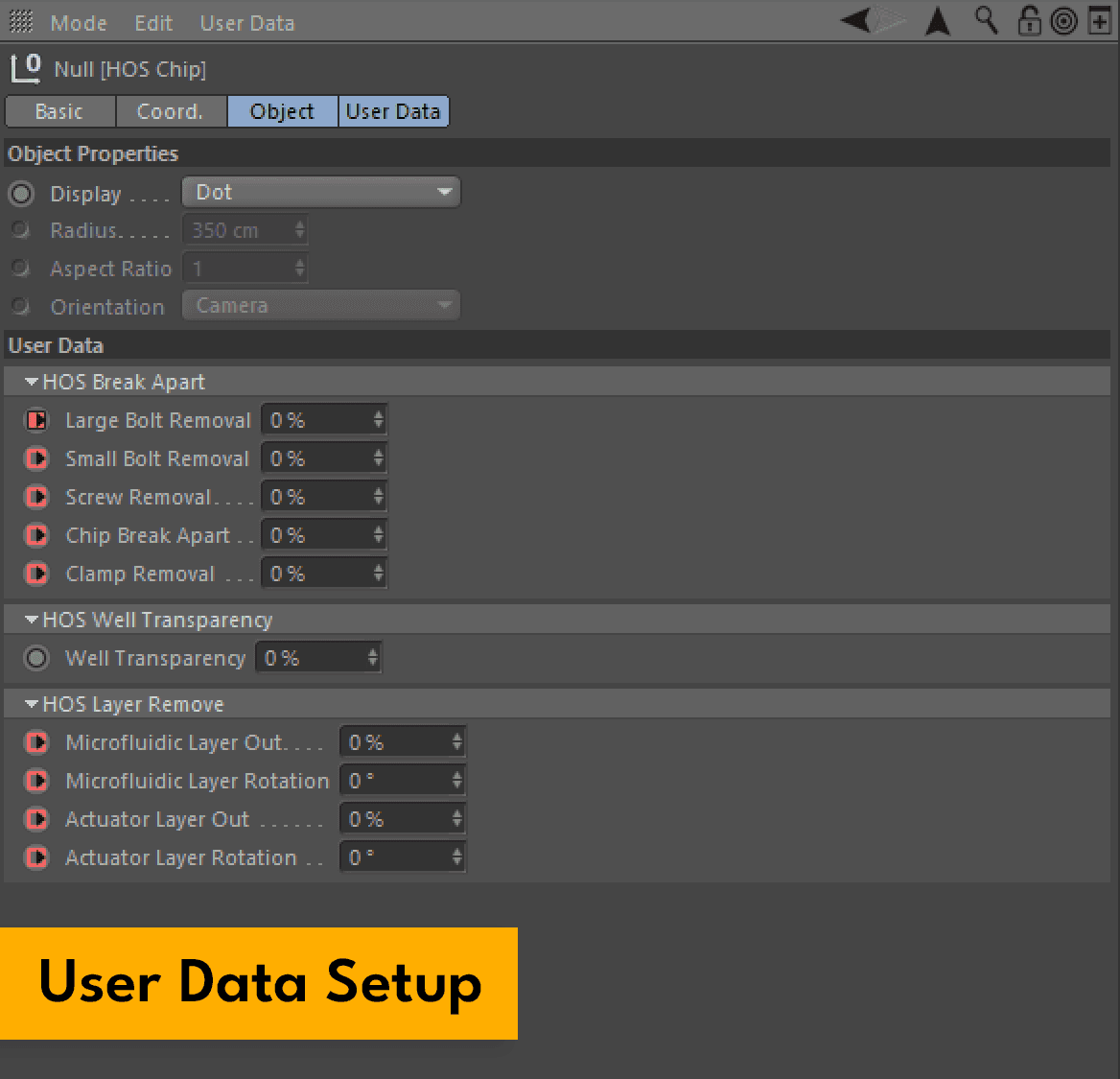
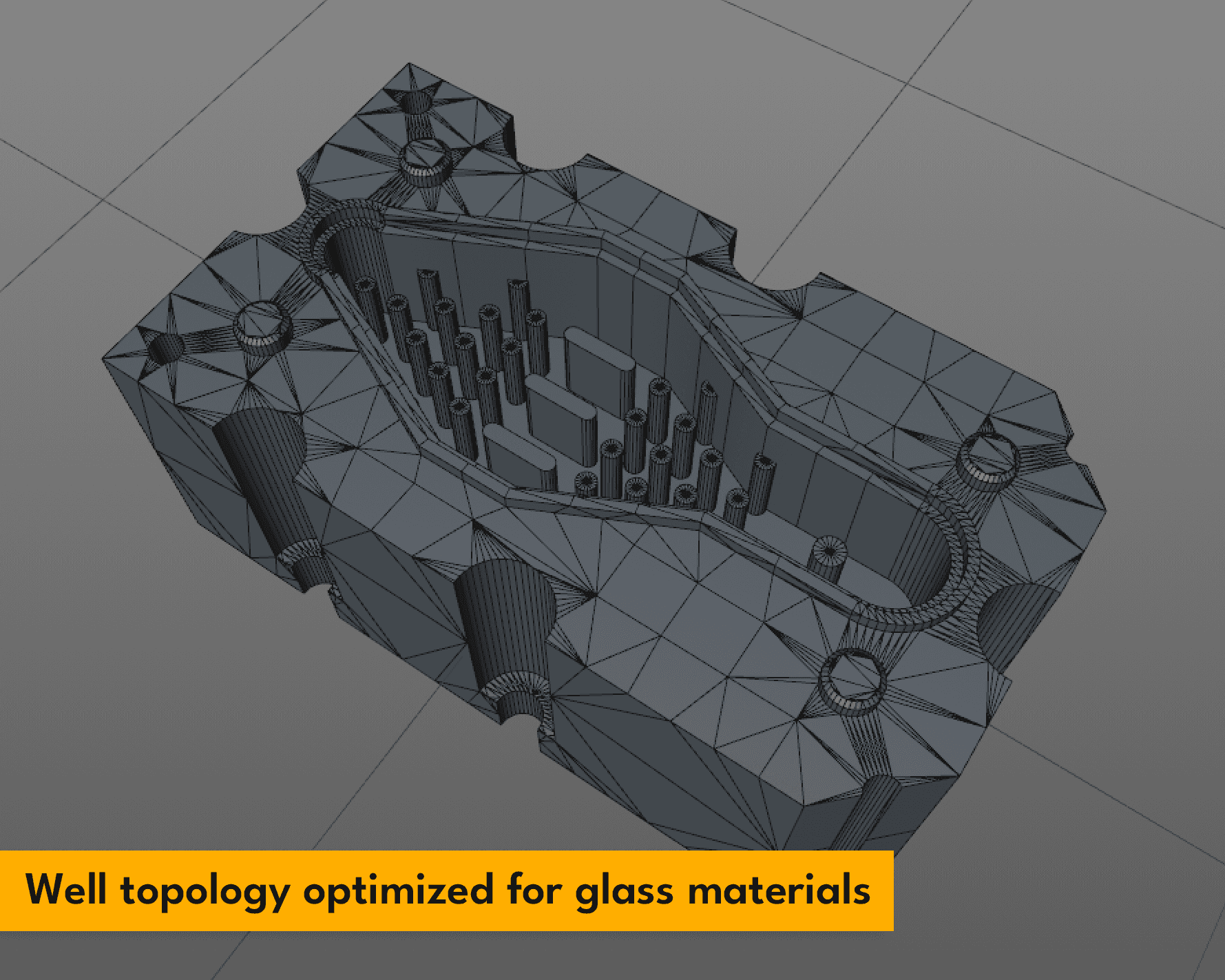
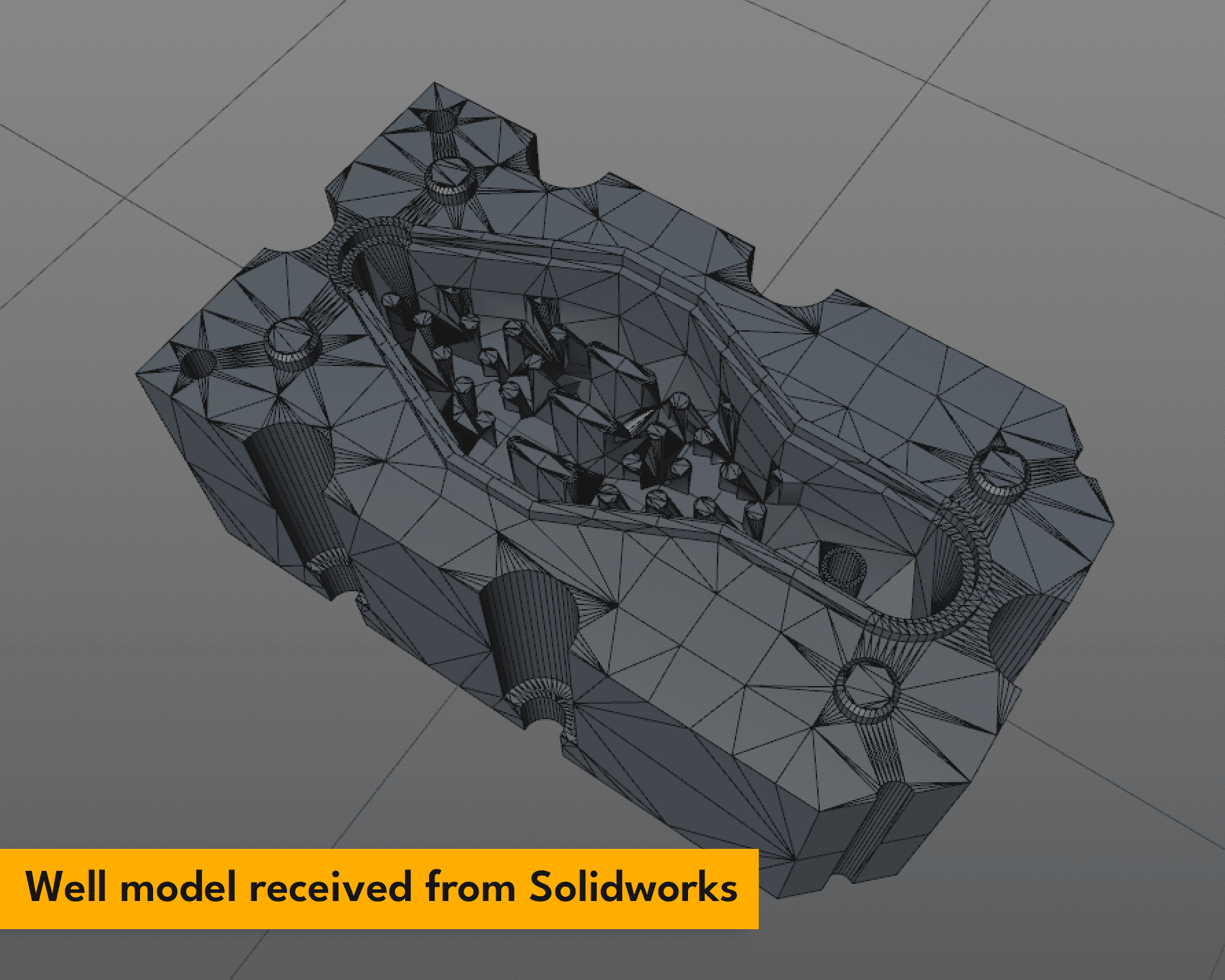
All visualizations were developed in Cinema 4D using engineering-provided CAD data. Complex SolidWorks assemblies were imported, rebuilt, and optimized into production-ready assets suitable for animation and rendering. Key components — including the microfluidic wells — were retopologized to improve surface continuity, refraction accuracy, and UV control, allowing the geometry to animate cleanly and render without artifacts while maintaining technical fidelity.
Working closely with engineering and industrial design teams across SolidWorks, Rhino, and Cinema 4D, I served as the visual bridge between technical development and communication — translating each new iteration of the platform into animation as it evolved. This cross-disciplinary collaboration was central to getting the details right: fluid behavior, material properties, channel routing, and system scaling all had to be represented accurately without sacrificing visual clarity.
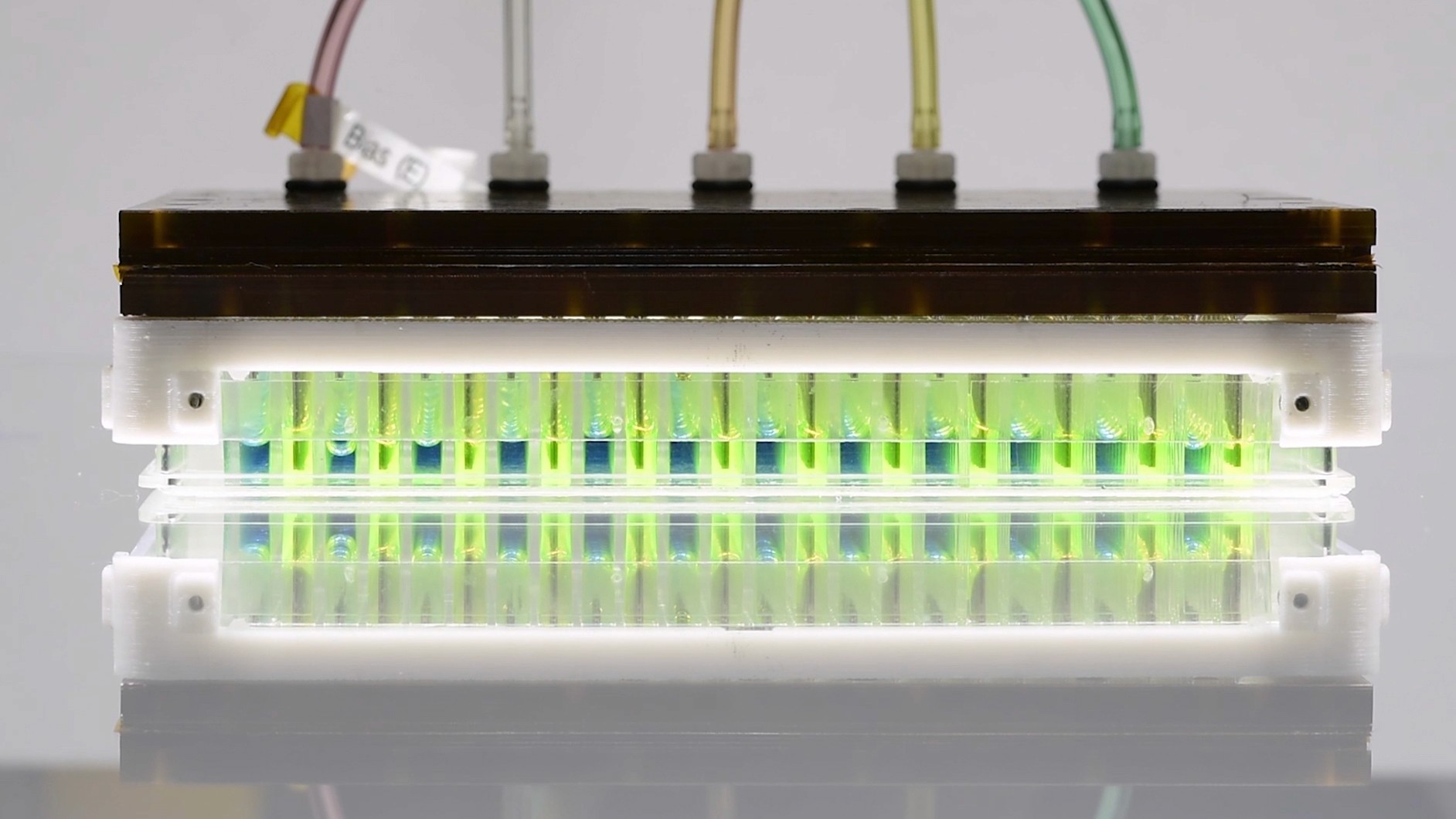
As the platform earned additional investment and scaled, the visualizations grew with it — expanding from single-unit animations into system-wide sequences showing how 96 independent microfluidic environments operate in parallel within a single device.
The Impact
Brought back as the platform evolved — because the work helped move it forward.
The animations and stills produced across both phases were used for internal development reviews, stakeholder presentations, investor communication, and external outreach. By making a microscale system visually accessible, the work helped Draper communicate the platform's value across technical and non-technical audiences alike — supporting HOS from early concept through to its emergence as a viable tool for drug discovery and development.
Note: My contribution to this project was exclusively visualization and animation. The engineering and device design were developed by Draper's research and industrial design teams.
DISCOVER MORE